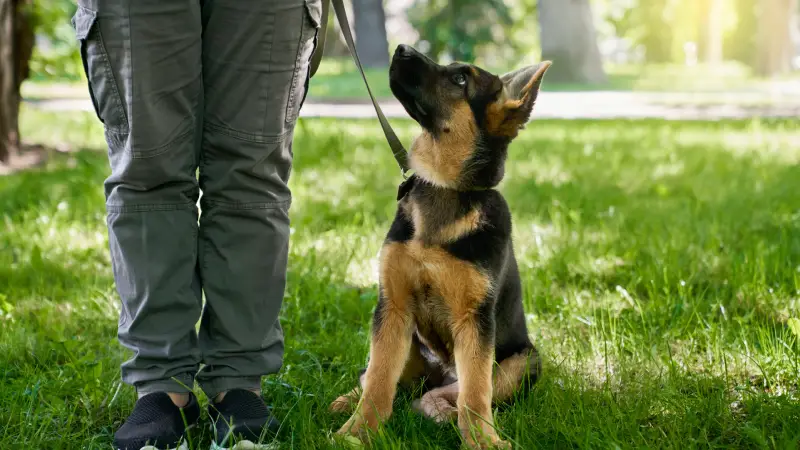
Puppy Training

While many trainers won’t even start with real training until the dog is four to six months old, I believe that is a serious mistake. The typical puppy class for younger pups is really only about socialization and introducing a few basic concepts.
However the IMPRINT PERIOD for puppies starts formally at three weeks of age and technically ends at about thirteen weeks. I believe some imprinting work can be done up until about the fifteenth or maybe the sixteenth week. What does this mean to us. It means that MORE CAN BE ACCOMPLISHED, WITH LESS EFFORT, AND LESS PROBLEMS, during this period, than at any other time in a dog’s life. It is amazing to many people what can be achieved before the puppy is four months old.
In puppy training everything is 100% positive and FUN, FUN, FUN for the puppy! Your puppy must be 15 weeks or younger to enroll in Puppy class. After that they are ready for basic obedience

Puppy Training ( $55/hr) $550 total

🎉 Special Offer!
10% OFF for Students, Seniors, Military & First Responders.
🎉 Special Offer!
10% OFF for Students, Seniors, Military & First Responders.
Working with an experienced dog trainer helps ensure this balance between structure and compassion, creating the foundation for a lasting bond. Positive leadership is about fostering a bond based on mutual respect and positive reinforcement. It means you're the benevolent leader who sets clear boundaries while rewarding desired behaviors, helping your dog thrive emotionally and physically. This approach aligns with modern behavioral science, drawing from studies like those by the American Veterinary Society of Animal Behavior, which emphasize reward-based training over punishment. For a dog, this translates to a world where good choices lead to joy—think treats, play, and praise—rather than fear or confusion. To achieve positive leadership, start with self-awareness. As a consultant, I often tell clients that true leadership begins with you. Dogs are expert readers of human emotions; if I'm a dog, I can sense when my human is stressed or inconsistent, which makes me anxious or rebellious. Aim to be calm and assertive, not aggressive. This means managing your own energy: take deep breaths, stay patient, and avoid yelling or physical corrections. Research from the Journal of Veterinary Behavior shows that dogs respond best to leaders who exhibit "predictable control," providing structure without intimidation. An experienced dog trainer can teach you how to model this calm, consistent energy effectively.