Section 1: Establishing Positive Leadership
As a certified canine behavior consultant, I view positive leadership not as dominating or "alpha-rolling" a dog (which is outdated and harmful), but as building a trusting relationship where you, the human, become a reliable guide. From a dog's perspective—think of me as a loyal pack member—leadership means having a steady leader who provides security, consistency, and rewards for good behavior. Dogs are descendants of wolves, wired for social hierarchies, but in modern homes, they seek humans who are calm, fair, and predictable. If I'm a dog, I don't want a bossy pack leader who uses force; I crave one who makes me feel safe and motivated to follow. Working with an
experienced dog trainer helps ensure this balance between structure and compassion, creating the foundation for a lasting bond.
Positive leadership is about fostering a bond based on mutual respect and positive reinforcement. It means you're the benevolent leader who sets clear boundaries while rewarding desired behaviors, helping your dog thrive emotionally and physically. This approach aligns with modern behavioral science, drawing from studies like those by the American Veterinary Society of Animal Behavior, which emphasize reward-based training over punishment. For a dog, this translates to a world where good choices lead to joy—think treats, play, and praise—rather than fear or confusion.
To achieve positive leadership, start with self-awareness. As a consultant, I often tell clients that true leadership begins with you. Dogs are expert readers of human emotions; if I'm a dog, I can sense when my human is stressed or inconsistent, which makes me anxious or rebellious. Aim to be calm and assertive, not aggressive. This means managing your own energy: take deep breaths, stay patient, and avoid yelling or physical corrections. Research from the Journal of Veterinary Behavior shows that dogs respond best to leaders who exhibit "predictable control," providing structure without intimidation. An experienced dog trainer can teach you how to model this calm, consistent energy effectively.
Here are some key tips and ideas to establish positive leadership, broken down step by step:
Build Trust Through Routine and Consistency:
Dogs thrive on predictability. From my canine viewpoint, a consistent routine feels like a secure pack structure—meals at the same time, regular walks, and clear rules. As a consultant, I recommend creating a daily schedule: feed your dog at set times, enforce boundaries (e.g., no jumping on furniture unless invited), and stick to them. Use positive reinforcement to reward compliance; for example, say "sit" before meals and give a treat when they obey. This reinforces that you're the provider, making me, the dog, more likely to follow your lead willingly. Inconsistency, like allowing jumping one day and scolding the next, confuses me and erodes trust. An experienced dog trainer can help you build and maintain this structured routine so your dog feels safe and secure.
Use Positive Reinforcement Training:
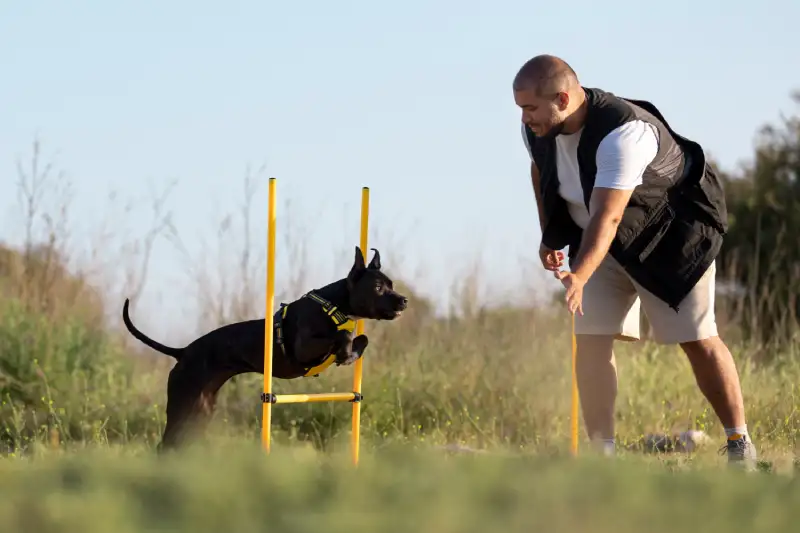
This is the cornerstone of positive leadership. Instead of punishment, focus on rewarding good behavior to encourage repetition. From a dog's perspective, it's like earning treats in a game—fun and motivating! Start with basic commands: teach "sit," "stay," or "come" using high-value rewards like small pieces of chicken or a favorite toy. Timing is crucial—reward immediately after the behavior to make the connection clear. I often suggest the "four quadrants" of operant conditioning: use positive reinforcement (add something good) and negative punishment (remove something good, like attention, for bad behavior) while avoiding positive punishment (adding something aversive). For instance, if I (as your dog) pull on the leash, stop walking, and wait calmly, when I return to your side, reward me. This builds a partnership where I see you as a fair leader. Consulting an experienced dog trainer ensures that timing, technique, and reinforcement methods are applied effectively.
Provide Physical and Mental Exercise:
A tired dog is a cooperative dog. In the wild, pack leaders ensure everyone gets exercise, so as a human leader, I make sure I'm the dog, get daily outlets for my energy. Aim for at least 30–60 minutes of physical activity, like walks or playtime, and mental stimulation through puzzle toys or training games. This prevents boredom, which can lead to destructive behaviors. From my canine viewpoint, a leader who engages me in fun activities makes me more eager to please. Tip: incorporate leadership walks where you lead the way confidently, and I learn to follow your pace. Studies from the University of Pennsylvania show that exercised dogs exhibit better obedience and lower stress levels. An experienced dog trainer can create customized exercise and enrichment plans to meet your dog’s unique energy needs.
Set Clear Boundaries with Empathy:
Boundaries aren't about dominance; they're about safety and respect. As a consultant, I advise using tools like baby gates or crates positively, not as punishment. For example, if I (the dog) guard my food, don't wrestle it away—teach me to "leave it" with rewards instead. From a dog's perspective, a leader who respects my space while guiding me makes me feel secure. Always end interactions on a positive note, like with petting or play, to reinforce your role as a benevolent guide. With guidance from an experienced dog trainer, you can implement these boundaries with confidence and compassion.
Foster Emotional Connection:
Positive leadership goes beyond training—it's about building a relationship. Spend quality time bonding through activities like grooming, playing fetch, or just relaxing together. Dogs are social animals; from my viewpoint, a leader who shows affection and reads my body language (e.g., a wagging tail or averted eyes) makes me loyal and responsive. Use techniques like the "attention ritual," where you call my name and reward eye contact, to strengthen our bond. Research from animal cognition studies indicates that dogs with strong human attachments are less likely to develop behavioral issues. Working alongside an experienced dog trainer can help you read your dog’s emotional cues and reinforce that sense of connection.
Seek Professional Guidance if Needed:
If you're struggling, consult a certified behaviorist. We can assess your dog's needs and tailor a plan. Remember, positive leadership is a journey, not an overnight fix. Celebrate small wins to keep motivation high.
In summary, establishing positive leadership means being a calm, consistent, and rewarding presence that your dog chooses to follow. From a canine perspective, it's like having a trusted pack leader who ensures everyone's needs are met, making life harmonious and enjoyable. By implementing these tips, you'll create a balanced relationship that enhances your dog's well-being and strengthens your bond—with help from an experienced dog trainer guiding you along the way.
Section 2: The Consequences of Failure to Achieve Positive Leadership
From the viewpoint of a certified canine behavior consultant, failing to establish positive leadership can lead to a cascade of behavioral, emotional, and physical problems for both dogs and their owners. If we imagine the canine perspective, it's like being in a pack without a reliable leader—confusion, fear, and chaos ensue, turning a once-happy dog into a stressed or unruly one. Dogs are hardwired for social structure; without positive guidance, they may try to fill the leadership void themselves, leading to issues like aggression, anxiety, or disobedience. This not only harms the dog but also strains the human-dog relationship, potentially resulting in rehoming, veterinary interventions, or even legal troubles.
The consequences stem from a lack of trust and clear communication. In behavioral science, as outlined by experts like Dr. Ian Dunbar, punitive or inconsistent training methods can suppress behaviors temporarily but often exacerbate underlying issues. From a dog's viewpoint, a human who uses force or neglect feels unpredictable and unsafe, much like a weak pack leader who can't protect the group. This can manifest in various ways, from mild annoyances to severe dangers.
Let's break down the key consequences:
Behavioral Problems and Destructive Actions:
Without positive leadership, dogs often act out due to pent-up energy, frustration, or anxiety. From my canine perspective, if my human doesn't provide structure, I might chew furniture, bark excessively, or dig holes as a way to cope or seek attention. As a consultant, I see this frequently: owners who yell or use physical corrections without teaching alternatives end up with dogs that escalate these behaviors. A study in the journal Applied Animal Behaviour Science links inconsistent leadership to higher rates of destructiveness, as dogs essentially "take over" the pack role.
Aggression and Conflict:
One of the most serious outcomes is aggression, which can be directed at humans, other animals, or even objects. Dogs might growl, bite, or lunge if they feel threatened or if they've learned that aggression works (e.g., through resource guarding). From a dog's viewpoint, this is a survival instinct—if my leader isn't protecting resources or setting boundaries, I have to do it myself. Punitive training often worsens this; research from the American Animal Hospital Association shows that aversive methods increase the risk of aggression by up to 300%. I've worked with cases where failed leadership led to dog bites, resulting in expensive medical bills, lawsuits, or euthanasia—a heartbreaking end for a confused pet.
Anxiety and Stress-Related Issues:
Dogs without positive leadership often develop chronic stress, leading to health problems like gastrointestinal issues, weakened immune systems, or even depression. From my canine perspective, an inconsistent human makes me constantly on edge, like waiting for the other shoe to drop in a pack. Symptoms include pacing, whining, or hiding. As a consultant, I draw from veterinary studies indicating that stressed dogs have elevated cortisol levels, which can shorten their lifespan. This anxiety can also translate to separation anxiety, where dogs destroy the house when left alone, further straining the owner-dog bond.
Social and Relationship Breakdowns:
Failed leadership erodes the trust between dog and owner, leading to a fractured relationship. Dogs might become withdrawn, disobedient, or even fearful of their humans. From a dog's viewpoint, it's like being in a pack where the leader is unreliable, making me less willing to follow commands or bond. This often results in owners surrendering their dogs to shelters, contributing to the millions of annual pet relinquishments in the U.S. As a consultant, I emphasize that without positive reinforcement, dogs may view interactions as adversarial, leading to avoidance or escape behaviors.
Long-Term Health and Welfare Impacts:
Physically, the stress from poor leadership can manifest in conditions like obesity (from lack of exercise) or injuries (from unmanaged hyperactivity). Mentally, dogs may suffer from learned helplessness, where they give up trying to please their owner. From my canine perspective, this feels like endless confusion in a pack, sapping my joy and enthusiasm for life. On a broader scale, failed leadership contributes to societal issues, such as increased stray populations or breed-specific legislation due to misunderstood aggressive behaviors.
Human Consequences:
It's not just the dog that suffers—owners face emotional exhaustion, financial strain from vet visits or training classes, and potential safety risks. In extreme cases, failed leadership can lead to family conflicts or even child endangerment if a dog becomes aggressive. As a consultant, I often work with remorseful owners who wish they'd started with positive methods earlier. The good news is that with intervention, many of these consequences can be reversed, but prevention is key.
In conclusion, the failure to achieve positive leadership creates a vicious cycle of behavioral and emotional turmoil. From a canine perspective, it's a world without the security of a strong pack, leading to distress and dysfunction. As a certified behavior consultant and experienced dog trainer, I urge owners to prioritize positive, proactive strategies—including structured
dog obedience training in Columbia, MO—to avoid these pitfalls and build a harmonious life together.


Comments